Russian Transport

| Wednesday, May 27, 2009
Getting to and from the city is only the first part of the battle. Next up, you have to get around the city. Over the past couple of years a lot more cars have shown up on the streets of Russia with the big credit boom that was going on. However, there is one big problem for everyone with cars in Russia – parking. There is hardly anywhere to park for all of the cars that already are on the road so I don't expect everyone to own a car, like in the United States, anytime soon without a major rethinking of how cities are lain out.

That being the case, there are 3 primary modes of transportation that are in basically every city and used by everybody daily, 1 form of transportation that is in every city but used rarely, and 2 other forms of transportation that are less common but still fairly prevalent.

The first mode of transportation is the bus (aftobus). The bus system is very intricate and will get you basically anywhere you need to go. I have never seen a bus schedule, or any other schedule for that matter, for what time the bus is going to be at the stop or anything like that. Transportation comes when it comes and it doesn't wait for anyone, literally. The biggest thing I dislike about the bus is that it is only so big. However, don't think that stops people from trying to cram in like sardines. At the busy times of day, you should be prepared to get real close to your lovely smelling neighbors, who if you're lucky have showered within the past couple of days and don't wreak of some form of alcohol (more on that to come). The bus however will get you where you need to go in a decent amount of time and was the form of transportation that we most commonly used as missionaries.

Anya getting on the bus.

Inside the aftobus.

Next up is the trolleybus. This isn't the bus and you will get corrected quickly if you call it the bus. It's the “trolley”bus because it runs on electricity which comes through the overhead connection it has, just like a trolley. The trolleybus is extremely slow and mainly older folks use it to get to their destinations. The trolleybus is slow because it can't go to fast or it will get disconnected from the overhead connection. If you want to take a nap, then the trolleybus might be the way to go (I have already ridden on the trolleybus once since we've been here).

The trolleybus - you can see the connection above the bus.

The last form of transportation that is in every city is the gazelle. No, these aren't little gazelles running around the city that people sit on, but vans, usually yellow, that sit from 8-14 people. Obviously, this mode of transportation is much quicker than the first two, but with so few places, often you will have to wait for awhile to get a spot and the cost is higher. However, if you want to get somewhere in about half the time, then a gazelle is the way to go. Be ready to tell the driver when you want to stop though because unlike the buses, the gazelle only stops when needed and not at every stop.

A picture of a very nice clean gazelle.

Inside the gazelle.

Me inside the gazelle.

Next up is the most expensive way, and that is by taxi. There are plenty of taxi drivers around, but be prepared to pay a good price. If you are super late though, a taxi driver is the way to go as they usually know the fastest way, and they will get you there quickly (more to come). You can usually just stick your hand out to flag down a passing by driver or actually call and order a taxi. You can get a great deal if you catch the right driver who is passing by.

Next up, the two forms of transportation that are not in every city, but still common. First up is the tramvai. This is another form of a train and if you live in salt lake, you can think of it as the 30 year old version of TRAX. It runs throughout the city and gets you where you need to go, but once again is pretty slow so make sure you've planned your time ahead.

A typical tramvai in Russia.

Finally, one of the coolest modes of transportation is the metro. The most intricate metro is found in Moscow and is has the smartest layout that I have ever seen. The metro has several levels in it and you can get pretty deep down into the earth at some of the stops. Other cities in Russia have a metro as well, but they are nowhere near as complex as the Moscow Metro. The Metro is one of the quickest ways to travel as the trains fly and there is no traffic to worry about. It still takes about 1 hour to get from one end of the Moscow metro to the other, which goes a long way in showing how big Moscow is.

A metro stop in Moscow.

The Moscow Metro map.

Train

| Tuesday, May 26, 2009
I have had so many Russian experiences in 3 days. It has been great. Russian life is so different. My first post about Russian life and culture is about the primary mode of travel from city to city in Russia, the train.

There are train stations in every major city and in almost every other little town (деревня) throughout Russia. Trains primary purpose in Russia are to get people from one place to another, unlike in the United States where the primary purpose is to move goods from one place to another. The most famous train is the Tran-Siberian which travels 6 days from one side of Russia to the other, however I have never actually ridden on this train.

The train station is always a busy place and you can think of it like the airport in America, because literally that is what it is. The train station in Moscow is a melting pot of nationalities, dominated by Russians of course. It is the starting and ending point for many people. We got there a few minutes early and I had time to snap a few pictures.

The train station (vokzal).

Conductor checking tickets and passports.


In order to get on the train you must show your passport and ticket upon which you go to find your spot on the train. Each spot is a bed, with two beds to a wall (one on top and one on bottom). Most people prefer the bottom bed because the top spot gets unbearably hot at night usually.

The next part will be hard to understand for most who have never been on a train in Russia, but there are two different car types where people can sleep. One of them has kypes, which are like small rooms, with 4 beds to a room. As missionaries we always traveled in kypes and we always paid for all of the spots in a kype even in we were only going to use 2 of the 4 spots. Each bed/spot is long enough to stretch out on for someone like me and the room gives you privacy since you can close and lock the door (however, locking the door usually isn't a good idea if you have other people in the room with you that you don't know).

The more common car that Russians typically travel in is called platscart. The plats cart is divided up also into rooms but the rooms don't close off and there are two additional spots at the end of each “room.” In other words, as you walk down the car, you walk by everyone and see them and what they are doing. It leaves no room for privacy, but is cheaper and since you are usually only traveling over night, it isn't usually too big a deal. I have traveled platscart 3 times now and never had any problems, and during this past trip met some very nice people who shared their food with us.
The two main car layouts.

A view from our bed.

The thing I love most about the train is that you can lay down and sleep. Yes, the train takes longer to get to your final destination, but catching some winks on the moving hotel is better than losing your lunch on the flying bird. Don't take my word for it though. Experience it for yourself!

The metal toilet in each car.

Russia - A Unique Land

| Thursday, May 21, 2009
Well, it's almost here. Just a few more hours and we're taking off for the Motherland. I can't believe it's been 3 years since I've been home from my mission! It is certainly crazy. Even crazier is that Anya and I will be celebrating our 2 year anniversary while there. It is going to be great to get away for a bit and relax some. It has been 2 years since we have taken a vacation so this is a well deserved break.

As I head back to Russia, I have a much better understanding of what the Russian culture is like than when I was serving my mission there. Not only have I had time to think about my mission and learn from it, but I've been living with a Russian now for 2 years :). A lot of people are still confused about what Russia is really like and I still get funny questions all the time. As a result, I have decided that over the next 2 weeks, I am going to be writing blog posts about the things I find unique and peculiar about the Great Mother Russia. Really, these things may not be unique to Russia but they are differences between Russia and America (the two countries I have spent so much time in). Here is a list of different topics that I plan to blog about:

  • McDonalds in Russia
  • Train
  • Apartment Buildings
  • Street Conditions (roads, drunks)
  • Rionok
  • Bus/Tram/Gazelle
  • CDs/DVDs and Copyright Laws
  • Grandmother's selling
  • No bags in stores
  • Church Members
  • Moscow Metro
  • Food/Candy

If you have any preference about what I blog about first, or if there is something else you would like to hear about, please leave a comment and let me know. I hope that others will make comments on my posts who have also been to Russia so we can get some different perspectives on subjects. As a warm up, here are a few pictures from the great country:

The first thing people think of when they think of Russia. (Moscow)

How most of Russia actually looks (see those beautiful homes in the background). (Izhevsk)

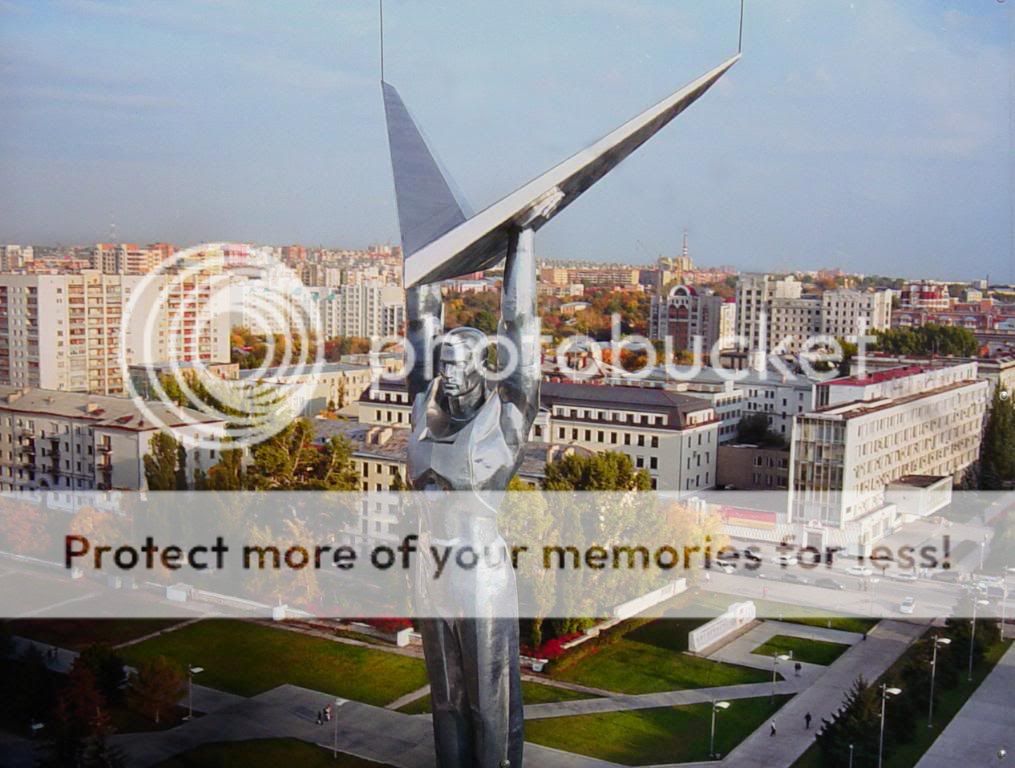
And yes, Russia really is beautiful. (Samara)

Gmail Importer - Not Quite There

| Monday, May 18, 2009
I can't believe that its been nearly a month since I posted here. We are going to Russia in 3 days!!! I can't wait. I will have lots to post about while I am there. Expect lots of posts when I get back.

I recently tested Google's new import tool to move all of your e-mail from your current e-mail provider to start using Gmail. I have been thinking about moving over to Gmail as my primary account, but I wasn't sure. I decided to see how the new import tool worked.

To start, I created a dummy Gmail account since the feature doesn't yet work with existing Gmail accounts, and besides I wanted to test it out anyways.

After creating my account, I had 3 e-mails in my Inbox which is definitely new as usually there is only 1 e-mail. One of them had instructions on importing my e-mails from other accounts.

To get started, I went to my settings and found the "Accounts and Import" tab (used to be just the "Accounts" tab) and found the button to import my old mail.

It took me through a pretty simple process of entering my e-mail address and password to access the old mail.


It then gave me some options for how I wanted my e-mails to be imported. I changed the tag from my e-mail address to say hotmail, but other than that I just left everything default.

Once I clicked the import button, I got the following screen that said I would need to wait for up to 2 days.

I went to bed and in the morning when I loaded Gmail back up, all of my e-mails had been moved over along with my contacts.

Well, almost all of my e-mails. Actually it looks like they are slowly pulling over all of the e-mails. And I mean slowly. It has now been more than a week since I signed up for the service and I still don't even have half of my e-mails moved over. Another issue that I found was that different languages don't seem to import correctly. Here is an example of what I am talking about.

Yes, that is Russian to me too :).

Overall, I think there is still some work to do before using this tool. Specifically, I think the overall time to import e-mails needs to be decreased significantly. Secondly, they need to figure out how to import e-mails in all languages. Since I have a lot of Russian e-mails, this is a problem. I think that this is an awesome idea though and once again, props to Google for another great idea. I am sure the kinks will work themselves out over the next couple of months.

Remember the Milk

| Wednesday, April 22, 2009
It's been a few weeks since I did a technology review of something cool that makes my life easier. I have been meaning to write about my to-do list for some time now but just haven't gotten to it. Remember the Milk is an awesome to-do list that manages what projects and tasks that you have coming up. I have been using it for about six months and have just recently discovered some more of it's awesomeness that has led me to use it even more.

I don't do well with to-do lists that are written and I always lose them and in the end it just never works out. Enter Remember the Milk to the rescue. The basic flow of entering a task and setting due dates and times is pretty straight forward. On top of the basic setup, there is tons you can do.To start off, I created a "Honey Do" list that is basically the things that my wife asks me to do (obviously everything on this list has top priority). Once I have my list created, all I have to do is start adding tasks and setting dates for when they're due. If it is something that I need to do many times, then I can set the recurring date to basically anything I want.

Adding tasks and setting a date and recurring date.

One of the biggest problems that I was having with this site is that I was never checking it. I would create tasks, but would never stop by to see what was due and when. Then I stumbled across one of the best features that I have found - the reminder. You can of course set up a standard e-mail reminder, but that is no fun and I don't need any more e-mails than I get. Instead, you can set it up to IM you on basically any or every IM platform. With my recent discovery of Digsby, I could choose basically any of the messaging systems that I wanted. You can see the different options that are found under the "Settings" for reminders and can set up as many of them as you want. After setting up mine for Skype (and modifying the due dates so I could show the notifications), here is what I got in Skype:
And if you're a Google freak like me, you can add your tasks to your Google Calendar where they will be shown on the days they are due and you can add new tasks and everything else you want. In other words, an extrememly powerful to do list integrated into your Google Calendar. You can also add it to several other Google services as well.
So if you need a way to keep track of all your tasks that you do on a day to day basis or if you just need a way to remember all those things that your spouse asks you to do. Check out Remember the Milk.

Save the Date

| Friday, April 17, 2009
If you've been waiting to start learning Drupal or if you haven't really thought about it, but you want to learn to build your own website quickly then you will definitely want to schedule April 21 on your calendar as busy. The Utah Drupal group is meeting on April 21 at 7 pm to complete a website marathon where we are going to build an entire site for a non-profit company, For Every Child, in about 2 hours. This is going to be an excellent exercise for brand new Drupalers up to seasoned veterans (I am far from being a seasoned Drupaler).

The other great part about this event is that it is going to be held right downtown in the Walker Center! No driving down to Orem or Provo this time! This event is sure to be one of the best meetings, if not the best meeting, of all times for the Utah Drupal group.

We are going to step through the entire process from start to finish including initial setup, what modules you want/need to get started, and how it all works. You can see the full agenda on the Utah Drupal group's website. Make sure you save the date because you don't want to miss this event.

A Train to Potevka

| Sunday, April 5, 2009

I just wanted to give a quick review of "A Train to Potevka." This book was very very interesting and I was captivated. The book is about a man who is in the CIA and travels to Russia to take on a very dangerous mission against some high level citizens in the USSR. It took place right near the collapse of the USSR - 1990 to 1991 because he meets the LDS missionaries in Moscow.

I think the reason I liked the book so much was because of how well Mike Ramsdell, the author, was able to describe Russia and the people there. I really wish that I could so well describe Russia. The part of the book that I disliked most about this book was the story of Bonnie, his girlfriend that later became his wife. It seemed a little out of place here.

Here are 3 quotes that could have been taken from my own journal from when I was in Russia:

Historically, and still today, they (women) remain the strength and character of Russia. The women are the powerful bond that holds the family, village, and nation together. Perhaps that is why these people refer to their homeland as Great Mother Russia.

Using antiquated shovels and makeshift brooms of bundled birch branches, hefty female workers with orange safety vests pulled over their coats, busily pushed snow from the walkways...p.275

The greatness of Russia has always been its people. During the seventy years of the USSR, any meaningful accomplishments or achievements were a result of the populace, not the Communist Party. It was the Soviet people that preserved the moral values of truth and goodness, not the mistaken ideological dogma of Marxism. And, today, that is still the hope of Russia's future - its people. p. 325-326

If you haven't read the book, you should check it out. It is a really easy read. See my friend's review as well.